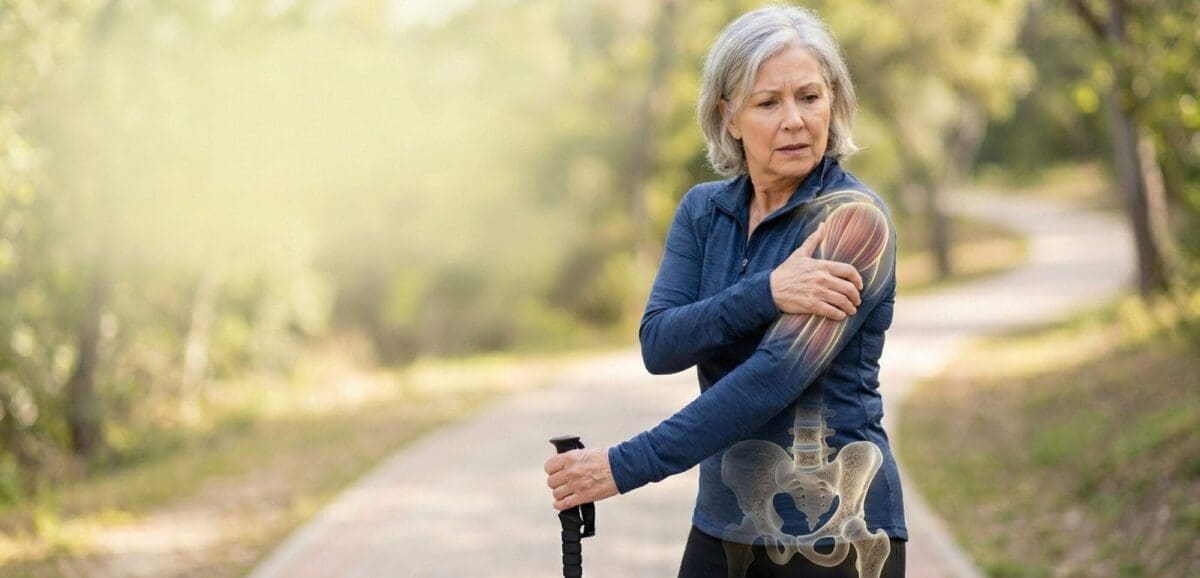
As we age, two silent threats work together to undermine our health: muscle loss (sarcopenia) and bone loss (osteoporosis). Most people think of these as separate conditions, one affecting strength, the other affecting fracture risk. But they’re connected, operating as a unified system that scientists now call the “bone-muscle unit.”
Understanding this connection is crucial because addressing one condition without the other leaves you vulnerable. When muscles weaken, bones inevitably follow. When bones deteriorate, muscles lose their foundation. This dual threat accelerates with age, increasing your risk of falls, fractures, loss of independence, and even mortality.
What Is Sarcopenia?
Sarcopenia refers to the progressive loss of skeletal muscle mass, strength, and function that occurs with ageing. This isn’t just about looking less toned; it’s about losing the metabolic system that keeps your body functioning properly.
The condition typically begins in your 30s, when muscle mass starts declining by approximately 1-2% annually. By age 50, this loss accelerates to 1.5% per year, and after 60, it reaches 3% annually. Between the ages of 30 and 60, we lose an average of 30% of our lean muscle mass.
Beyond reduced strength, sarcopenia lowers your metabolic rate, impacts daily activities, and dramatically increases your risk of falls and injury.
What Is Osteoporosis?
Osteoporosis is a skeletal disease characterised by low bone mass and deterioration of bone tissue, leading to increased fragility and susceptibility to fractures. Bone is a living tissue that constantly breaks down and rebuilds through bone remodelling. With osteoporosis, the balance shifts toward breakdown, resulting in bones that are porous, weak, and prone to fracturing from minor impacts.
In Ireland and across Europe, osteoporosis represents a significant health burden. According to the International Osteoporosis Foundation’s SCOPE report, fragility fractures cost European health care systems €56.9 billion annually, with 4.3 million new fractures occurring each year across EU countries. (source: International Osteoporosis Foundation)
The Bone-Muscle Unit – How They Work Together
Mechanical Loading
When muscles contract, they pull on bones, creating forces essential for maintaining bone strength. Known as Frost’s mechanostat theory, the mechanical load exerted by muscle determines bone resistance. These forces trigger mechanoreceptors on bone cells, stimulating osteoblasts, the cells responsible for building new bone tissue.
When muscle function declines with sarcopenia, there’s less force applied to bones. Without this crucial signalling, bone loss accelerates, contributing directly to osteoporosis development. Essentially, your muscles tell your bones how strong they need to be.
Biochemical Crosstalk
Beyond mechanical forces, muscles and bones communicate biochemically through muscle-derived factors called myokines, which influence bone metabolism. When muscle mass declines with sarcopenia, this regulatory interaction is disrupted, contributing further to bone loss.
Shared Risk Factors Sarcopenia and osteoporosis share numerous risk factors: ageing, physical inactivity, hormonal changes (declining estrogen in women, testosterone in men), nutritional deficiencies, chronic inflammation, and genetics. Post-menopausal women face a particularly high risk for both conditions simultaneously.
Osteosarcopenia – The Double Jeopardy
The coexistence of osteoporosis and sarcopenia has been termed “osteosarcopenia.” This combined condition represents double jeopardy because the effects are synergistic rather than simply additive, dramatically increasing the risk of falls, fractures, loss of independence, institutionalisation, and mortality.
Individuals with sarcopenia have an approximately 5-fold increased risk of concomitantly developing osteoporosis, demonstrating just how dynamically these two conditions interact.
How Muscle Loss Accelerates Bone Loss
When muscle mass decreases, several consequences follow:
Less muscle means fewer contractions and lower forces applied to bones, reducing osteoblast activity and tipping the balance toward net bone loss. Weak muscles lead to increased sedentary behaviour, creating a vicious cycle where less activity means weaker muscles, weaker muscles mean less bone stimulation, and weaker bones make activity more dangerous.
Finally, sarcopenia dramatically increases fall risk and when falls do occur on osteoporotic bones, the consequences are severe.
Why Resistance Training Is The Solution For Both
Whilst sarcopenia and osteoporosis often develop together, they also respond together to the same intervention, Resistance Training.
How Resistance Training Builds Bone
When you engage in resistance training, muscles pull forcefully on bones, triggering a cascade of bone-building responses. Mechanoreceptors detect the increased force, osteoblasts are activated, new bone tissue forms, and bone density increases. Research confirms that resistance training improves bone mineral density even in older adults who already have osteoporosis.
How Resistance Training Preserves Muscle
Resistance training combats sarcopenia by stimulating protein synthesis, activating satellite cells that repair muscle fibres, improving neuromuscular coordination, and increasing muscle fibre size and strength. The combination of resistance training and adequate protein intake can maintain or even increase muscle mass in older adults, reversing years of sarcopenic decline.
Essential Nutritional Support
Whilst resistance training provides the mechanical stimulus, nutrition provides the building materials. Both muscle and bone require adequate nutrition to respond to training.
Protein: The Foundation
Protein is crucial for both tissues. Muscle requires protein to rebuild after training. Bone matrix, the structural framework that minerals attach to is primarily made of collagen, a protein.
Older adults experience “anabolic resistance,” meaning they need more protein than younger adults to trigger the same muscle-building response. Most experts recommend 60-90 grams of high-quality protein daily for older adults, with some suggesting even higher intakes (0.8-1.0 grams per pound of body weight) for those actively training.
Calcium and Vitamin D
Calcium is the primary mineral in bone, whilst vitamin D enhances calcium absorption and supports muscle strength. Many adults, particularly in Ireland, with limited sunlight exposure, are deficient in vitamin D, affecting both bone and muscle function.
Magnesium and Other Minerals
Magnesium is involved in bone structure and muscle function. Deficiency affects both tissues. A comprehensive approach to mineral nutrition supports optimal musculoskeletal health.
If you’re looking to support your bone and muscle health through nutrition, browse our range of supplements at the Educogym online store, carefully selected to complement your training and nutritional needs.
The Educogym Approach To Muscle And Bone Health
At Educogym, our approach addresses both sarcopenia and osteoporosis through focused resistance training. Our 20-minute sessions using specialised Time Machine equipment create the mechanical loading that both tissues need.
In our university-validated study, participants lost 7.5 lbs of fat whilst gaining 3 lbs of muscle in just 12 days with only 4 hours of total exercise, demonstrating that with proper resistance training, you can build muscle mass even in a condensed timeframe.
Our approach combines resistance training to provide the mechanical stimulus that triggers both muscle growth and bone strengthening, low-glycaemic nutrition plans to ensure adequate protein and minerals, and mind training methodology to maximise training intensity and consistency.
Taking Action – Your Musculoskeletal Health Matters
The key is taking action early. Building and maintaining muscle mass through your 30s, 40s, and 50s provides protection against both sarcopenia and osteoporosis in later decades.
Ready to protect both your muscles and bones? Book your free consultation for a comprehensive assessment and discover how our training programmes can help you build the strength and bone density you need for lifelong health.