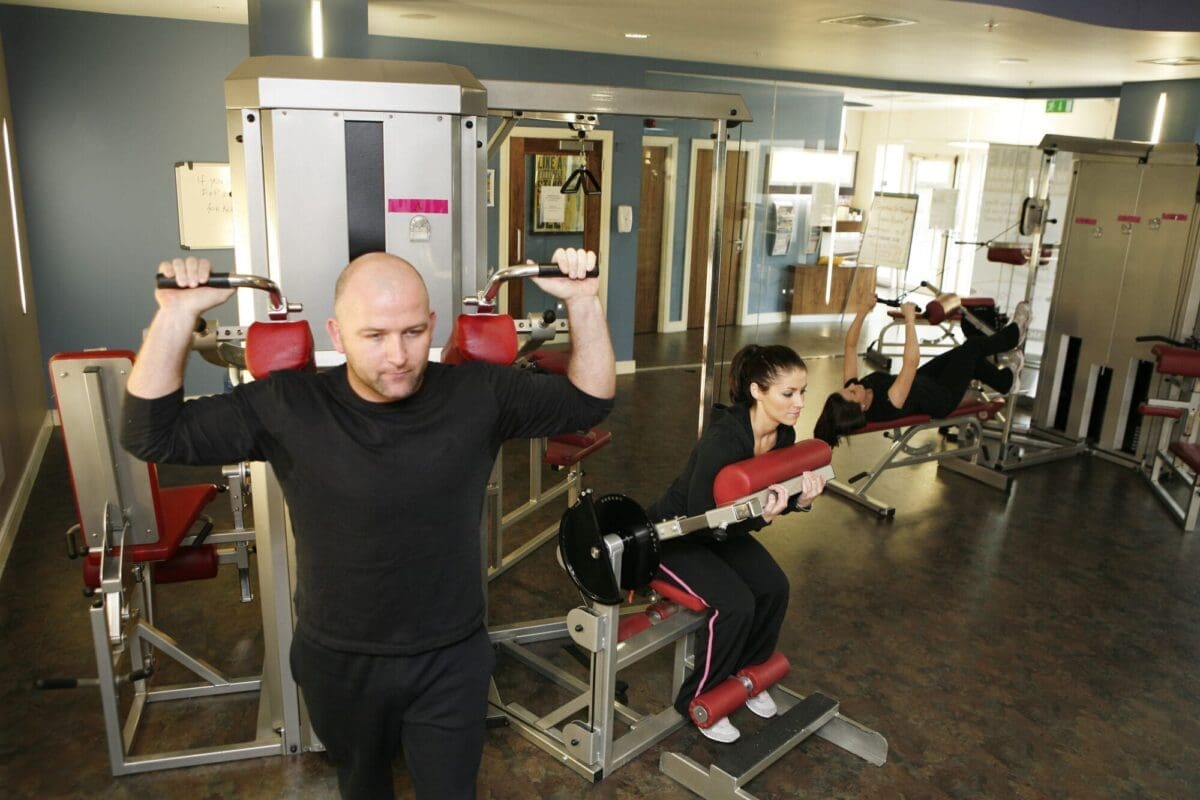
Most people trying to lose fat turn straight to cardio. More running, more time on the treadmill, more steps. It feels right, you’re burning calories, you’re sweating, you’re working hard.
But what works in a single session isn’t the same as what works long term. And when it comes to sustainable fat loss, the science points in a very different direction.
What’s Actually Happening When You Lose Fat
Fat stored in your body is essentially stored energy. When your body needs energy that isn’t coming from food, it breaks down fat cells and converts them into usable fuel. The by-products, carbon dioxide and water, leave your body through your breath and urine.
So far, so straightforward. The question is what determines how much fat your body burns and when.
This is where metabolism becomes central to the conversation. Your basal metabolic rate is the number of calories your body burns at rest just to keep everything functioning: heart, lungs, organs, brain, and temperature regulation. It accounts for roughly 60 to 70% of your total daily calorie burn. Exercise, including long cardio sessions, accounts for far less than most people assume, typically 15 to 30% of total energy expenditure.
Fat loss isn’t just determined by what you burn in the gym, it’s driven by what your body does the rest of the day. It’s heavily influenced by what your body burns the other 23 hours of the day. And that is largely determined by one thing: how much lean muscle you carry.
Why Muscle Mass Changes Everything
Muscle tissue is metabolically expensive. It costs your body more calories to maintain than fat tissue does. Per kilogram, muscle burns roughly three times more energy at rest than fat. Someone with more lean muscle has a higher resting metabolic rate. Their body burns more calories doing nothing, watching TV, sleeping, sitting, or going about their day.
Someone who loses muscle alongside fat, through crash dieting, using GLP-1s or excessive cardio without resistance training, ends up with a lower resting metabolic rate than when they started. They need fewer calories to maintain their weight. The deficit that was producing results starts to close. Progress stalls.
This is the metabolic trap that most repetitive dieters fall into without realising it. The body composition changes in a direction that makes fat loss progressively harder, not easier, each time.
Resistance training directly addresses this. When you train with resistance, you send a clear biological signal: muscle is being used, muscle is needed. Your body adapts by maintaining and building lean tissue. That preserved muscle keeps your metabolism elevated, not just during training, but in the hours and days that follow.
The EPOC Effect – Why The Calorie Burn Doesn’t Stop When You Do
After a high-intensity resistance session, your body doesn’t simply return to its resting state the moment you stop training. It enters a period of elevated oxygen consumption as it works to restore normal physiological conditions.
This is called Excess Post-exercise Oxygen Consumption, or EPOC. In plain terms, it’s the afterburn effect. Your body continues burning additional calories for hours, sometimes up to 24 to 36 hours, after a well-structured resistance session, as it repairs muscle tissue, restores energy stores, and normalises hormone levels.
Steady-state cardio, like a 45-minute jog at moderate intensity, produces relatively little EPOC. The calorie burn is largely confined to the session itself. A 20-minute high-intensity resistance session, by contrast, can generate a meaningful EPOC effect that continues working long after you’ve left the gym.
This is a significant part of why shorter, more intense resistance sessions consistently outperform longer cardio workouts when fat loss is the primary goal.
The Hormonal Side Of Fat Loss
Cortisol and fat storage
Cortisol is your primary stress hormone, and it has a direct relationship with fat storage, particularly visceral fat, the fat stored around your organs. When cortisol is chronically elevated, your body is in a state that actively promotes fat storage, especially around the midsection.
What elevates cortisol? Stress, poor sleep, and crucially, excessive exercise. Very long, high-volume cardio sessions can actually raise cortisol levels. This is one reason why people who do hours of cardio every week sometimes find their body composition stubbornly resistant to change. They’re training hard but inadvertently keeping cortisol elevated, which works against fat loss at a hormonal level.
Shorter, well-structured resistance sessions don’t produce the same sustained cortisol response. They create a brief, acute stress followed by recovery. Over time, this cycle can actually improve your body’s stress response rather than overload it.
Insulin and fat metabolism
Insulin is released in response to carbohydrate intake and plays a major role in whether your body is in fat-storage or fat-burning mode. When insulin is high, fat burning is suppressed. When it’s low, as it is during fasted states, between meals, and during exercise, your body has better access to fat stores.
Resistance training improves insulin sensitivity over time. Your cells become more responsive to insulin, which means your body needs to release less of it in response to the same amount of food. This creates a more favourable hormonal environment for fat burning, not just during sessions but throughout the day.
Growth hormone and fat mobilisation
High-intensity resistance training stimulates the release of growth hormone, which directly promotes fat mobilisation, the release of fatty acids from fat cells to be used as fuel. Growth hormone also supports muscle preservation and repair.
The peak of growth hormone release occurs during sleep, which is one reason sleep quality has such a measurable impact on body composition. It’s also another argument for training intensity over training duration. Shorter, more intense sessions produce a stronger growth hormone response than long, moderate-intensity cardio.
Why Cardio Still Has a Place
Cardio isn’t without value. It supports cardiovascular health, improves aerobic capacity, reduces stress for many people, and can contribute to a calorie deficit. For general health, regular movement of any kind is beneficial.
The point isn’t that cardio is bad. It’s that if fat loss and body composition change are the primary goals, defaulting to cardio as the main tool is not the most effective strategy. Resistance training, for the reasons above, produces a more favourable hormonal environment, preserves the muscle that keeps metabolism elevated, and generates a post-exercise calorie burn that cardio doesn’t match.
The most effective approach combines resistance training as the foundation with sensible nutrition and adequate recovery, not hours of additional cardio on top.
Ready to Train Smarter, Not Just Harder?
Educogym is a global award-winning gym empowering busy people to get faster results. The key is doing the right things – resistance-based training that works with your hormones rather than against them, health analysis and a personalised nutrition plan built around your body, an accountability coach keeping you on track.
In our university-validated 12-Day Programme, participants achieved an average of 7.5lbs of fat loss while gaining 3lbs of muscle, with just four hours of total training. That’s what resistance-based training combined with the right nutrition looks like in practice.
And the best part? You don’t need hours in a gym for it to work. Just 20 minutes of training, three times a week. That’s one hour a week. With gyms in Dundrum, Blackrock, Naas, Docklands, Castleknock and more across Ireland, there’s likely one near you.
Book your free consultation here and see how our programmes can help you get results that actually last.